Over the last decade, artificial intelligence has advanced rapidly, driven by the development of large-scale models capable of learning from vast amounts of multimodal data. Models such as Gemini, ChatGPT, or Claude have demonstrated impressive performance in tasks ranging from natural language understanding to content generation, and they are now widely applied in both academic and industrial settings.
Despite these achievements, researchers have identified a critical limitation in current AI systems. Most existing models rely heavily on static data and pattern recognition, which allows them to reproduce knowledge but not to truly understand or experience the environments in which they operate. As a result, their intelligence remains largely passive, lacking the ability to reason through interaction, experimentation, and adaptation over time.
To address this limitation, the concept of world models has gained increasing attention. Rather than treating intelligence as the ability to generate correct outputs from large datasets, world models emphasize understanding the structure and dynamics of the environment itself.
The Definition of World Model
A world model is an artificial intelligence system that learns to represent how the world works and how it changes over time. Instead of only responding to inputs, a world model builds an internal simulation of its environment, including objects, events, and the relationships between them. This internal model allows an AI system to simulate potential future scenarios before taking action.
World models often integrate concepts from physics, probability, and causality to approximate how the real world behaves. By learning these underlying rules, the AI can generalize beyond previously observed data and adapt to new situations. In this sense, world models serve as the cognitive core that transforms AI from a passive pattern recognizer into an active agent capable of reasoning about the world.
Benefits of World Models
Improved Planning and Decision-Making
One of the most significant benefits of world models is their ability to support advanced planning and decision-making. By maintaining an internal simulation of the environment, AI systems can evaluate multiple action sequences before committing to a specific choice. This allows them to anticipate long-term consequences rather than relying solely on immediate feedback. Such capability is particularly important in complex environments where decisions are interdependent and outcomes are uncertain.
To put it more simply, a clear example can be seen in autonomous driving, where self-driving vehicles operate in highly dynamic environments, they must constantly perceive their surroundings, predict the actions of other road users, and make timely decisions under uncertainty. World models enable these systems to maintain a continuously updated representation of the driving environment, capturing not only vehicles and pedestrians, but also road structure, traffic rules, and changing conditions.
Optimizing Cost, Time, and Risk
World models allow AI systems to learn by simulating interactions internally, reducing the need for extensive real-world experimentation. This significantly lowers the cost, time, and risk associated with training intelligent agents, especially in environments where mistakes can be dangerous or expensive.
By exploring hypothetical scenarios, AI can test strategies, observe outcomes, and refine its behavior without causing real-world harm. For example, in the medical and healthcare domain where experimentation is often costly, time-consuming, and ethically constrained. World models allow AI systems to simulate disease progression, test different treatment strategies, and observe potential outcomes without putting patients at risk.
Better Representation of the Real World
World models help AI generate visual content that looks more realistic by understanding how objects move and interact in the real world. Instead of focusing only on appearance, these models take into account basic physical principles, such as motion, contact, and spatial relationships. As a result, the visual outputs produced by world models can be more accurate and consistent over time. In many cases, these outputs can also be used as synthetic data to train perception-based AI systems.
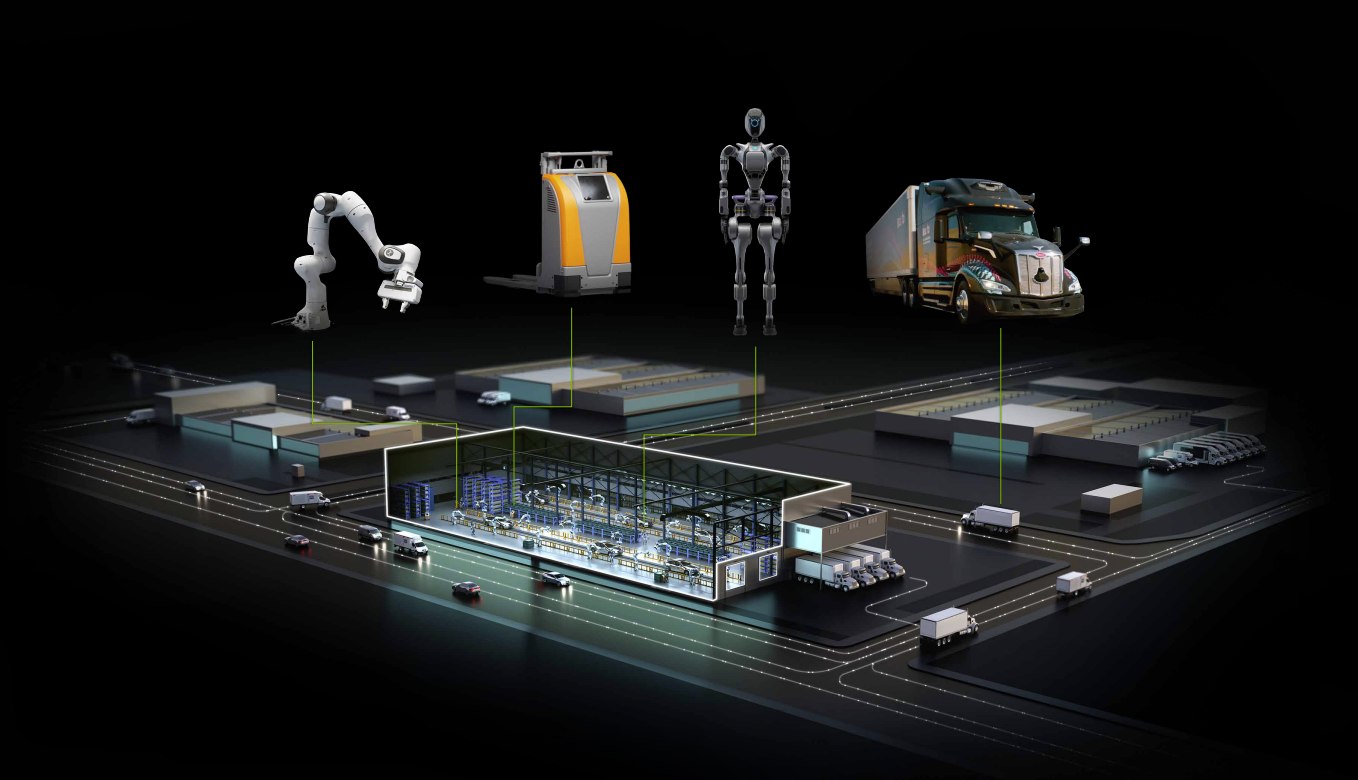
Current AI video generation systems often fail when faced with complex scenes, largely because they lack a true understanding of cause-and-effect relationships. In contrast, world models, especially when integrated with 3D simulation environments, demonstrate a more structured form of visual reasoning. They can simulate scenarios in which actions lead to consistent physical outcomes, such as an industrial robot lifting a heavy object surrounded by debris, where factors like weight, contact forces, and environmental constraints must be considered.
World Model’s Drawbacks
Despite their strong potential, world models face several challenges that limit their practical deployment. One major drawback is the high computational and data cost required to train and maintain accurate models of complex environments. Developing reliable world models often demands large-scale multimodal datasets and extensive computing resources, making them difficult and expensive to scale.
Another limitation is that world models are inherently imperfect representations of reality. Since no model can capture all variables and causal relationships in the real world, world models may produce inaccurate or incomplete predictions, particularly when encountering scenarios outside their training distribution. This can lead to suboptimal or even unsafe decisions in real-world applications.
Companies Shifting Toward World Models
In recent years, world models have moved beyond academic research and attracted growing interest from leading technology companies and startups, which are increasingly investing in this approach as a foundation for building more capable and reliable AI systems.
According to TechCrunch, World Labs, a startup co-founded by Fei-Fei Li that raised $230 million to develop large world models capable of understanding and generating 3D environments, has accelerated the world model race with Marble – its first commercial product which enables the creation of persistent and editable 3D worlds from text, images, or video.
Moreover, large technology companies are also moving in this direction. Meta, for instance, Meta is actively exploring world models as a core technology for advancing virtual environments and metaverse-related applications (VKTR, 2025). By using world modeling, Meta’s AI systems can simulate and predict user interactions, enabling more immersive and adaptive digital spaces. These models also contribute to improved AI-driven personalization across Meta’s platforms, helping tailor content and experiences to user preferences.