In 2026, artificial intelligence has moved well beyond experimentation in the retail and consumer packaged goods (CPG) sectors. According to the latest State of AI in Retail and CPG survey from NVIDIA, businesses are transitioning from early-stage pilots to full scale deployment of AI tools across operations, customer experience, and supply chain functions. This shift shows that AI is now a practical driver of business value rather than just a future idea.
Nearly all companies are now engaged with AI. The survey found that around 91% of respondents say their organizations are either actively using AI or evaluating its adoption. In response to early returns, most companies plan to increase their investment in AI technologies in 2026.
AI’s influence is already measurable in several key areas:
- Revenue and cost impact: A large majority report that AI is contributing to higher annual revenue and lower operating costs. Nearly nine out of ten respondents noted revenue gains with AI, while an even higher share reported cost reductions.
- Business performance: Many respondents said AI boosts employee productivity, drives operational efficiency, and improves customer service – concrete outcomes that go beyond theoretical promise.
- Strategic value of open source: Open-source AI models and tooling are now seen as a central part of many companies’ AI strategies, giving businesses more flexibility to adapt solutions to their data and processes.
Agentic AI Gains Momentum Across Retail and CPG
One emerging trend highlighted in the survey is the rise of agentic AI systems – intelligent agents designed to operate with a higher degree of autonomy than traditional AI tools. Unlike rule-based automation or single-purpose models, these agents can independently perform tasks, coordinate actions across systems, and make decisions based on real-time data and defined objectives. This shift marks a move toward AI that does not just support human work, but actively participates in it.

Nearly half of the respondents say they are already using or evaluating AI agents, signaling growing confidence in their practical value. In many organizations, these agents are being applied to operational workflows, where speed and consistency are critical. For example, AI agents can continuously monitor inventory levels, sales patterns, or supply chain signals and take predefined actions without waiting for manual intervention. This allows businesses to respond faster to demand changes and reduce operational friction.
Strengthening Supply Chains
Another important focus highlighted in the survey is how AI is reshaping supply chain operations across retail and CPG organizations. Ongoing volatility, shifting consumer demand, and global sourcing challenges have made supply chains more complex and harder to predict. According to the survey, many companies are turning to AI to gain better end-to-end visibility, using data from across their networks to understand risks, bottlenecks, and inefficiencies earlier than before.
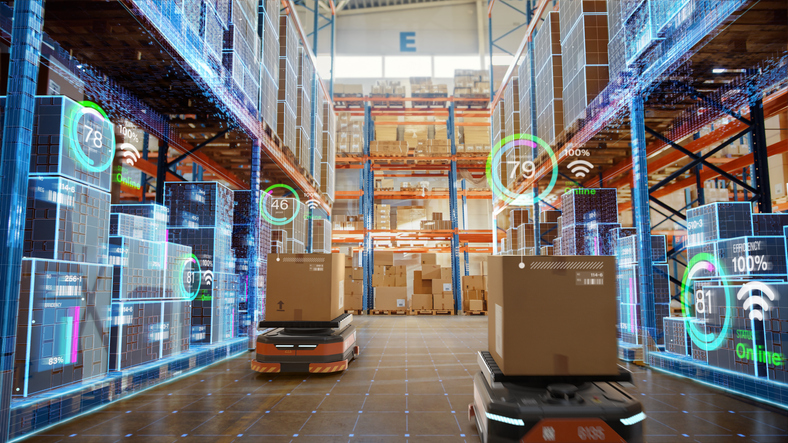
AI is enabling more accurate demand forecasting, smarter inventory optimization, and faster responses to disruption, all of which are priorities for over half of the industry. By identifying patterns and risks earlier, AI-driven systems allow organizations to reduce out-of-stocks, limit excess inventory, and adapt more quickly to changes in supply or demand. These capabilities are becoming increasingly important as retailers and CPG companies seek to balance efficiency with flexibility in an uncertain operating environment.
The Infrastructure Behind A Superb AI Solution
As organizations increasingly rely on AI to consistently drive revenue growth and meaningfully improve operations across their businesses, its impact across retail and CPG domains has become undeniable.
However, building such AI systems is far from simple; organizations will need a strong and resilient infrastructure. From fast GPU resources to flexible model training environments and seamless model deployment, these capabilities are what transform theory into practice.
Recognizing that organizations are actively seeking this level of AI infrastructure, FPT launched FPT AI Factory in Japan and Vietnam, equipped with thousands of cutting-edge NVIDIA H100/H200 GPUs, delivering exceptional computing power. With this computational strength, businesses are allowed to drastically reduce research time while accelerating AI solution development and deployment by more than 1,000 times compared to traditional methods. This creates vast opportunities for turning ideas into reality and applying AI to enhance efficiency and innovation across all areas.
Source: NVIDIA