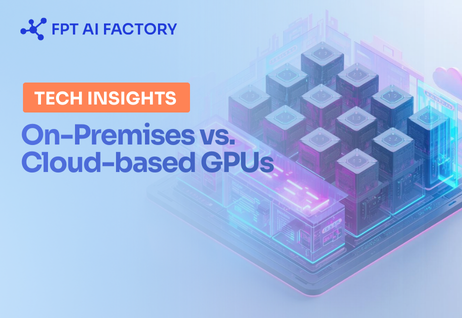

Distributed LLM training is becoming essential as large language models grow in size, training time, and infrastructure demands. Single-node setups can quickly run into limits in GPU memory, throughput, and scalability, especially for large models and datasets. In this article, FPT AI Factory explains why distributed LLM training matters, how a Slurm GPU cluster helps coordinate multi-node workloads, and what this means for scalable AI infrastructure.
1. What is distributed LLM training?
Distributed LLM training is the process of training a large language model across multiple GPUs, nodes, or both, instead of relying on a single machine. Rather than placing the full compute burden on one system, the workload is distributed across a cluster so that model computation, memory usage, and training time can be handled more efficiently.
This approach is increasingly important because modern LLMs require substantial compute resources to process large datasets and train models with billions of parameters. As model size grows, single-node environments often become constrained by GPU memory, training throughput, and overall system scalability. Distributed training helps address these limits by allowing teams to use multiple GPUs in parallel and scale training across nodes when needed.
In practice, distributed LLM training is used to improve training speed, support larger models, and make better use of available GPU infrastructure. It is especially relevant for organizations building or adapting LLMs for production-scale AI workloads.

Distributed LLM training helps AI teams scale model training across multiple GPUs and nodes for larger AI workloads
2. Why does LLM training require a multi-node setup?
Large language models are significantly more demanding than conventional machine learning workloads. Training them involves large parameter counts, long training cycles, and substantial memory and compute requirements. As a result, running the full training process on a single node is often inefficient or technically limiting.
A multi-node setup helps overcome these constraints by distributing training across multiple machines, each equipped with GPU resources. This makes it possible to process larger workloads in parallel and reduce the time required to complete each training cycle. A multi-node approach is especially useful for:
- Training models with billions of parameters
- Working with very large datasets
- Reducing training time for large-scale experiments
- Improving scalability as model and data requirements grow
- Making better use of available GPU cluster resources
For many AI teams, multi-node training is no longer an optimization choice alone. It is a practical requirement for training LLMs efficiently at scale.
3. Single-node vs multi-node LLM training
The difference between single-node and multi-node training becomes clearer when comparing their operational limits and scalability.
| Aspect | Single-node training | Multi-node training |
| Compute resources | Limited to one machine and its GPUs | Distributed across multiple machines and GPUs |
| Model capacity | Constrained by local GPU memory | Better suited for larger models |
| Training speed | Slower for large workloads | Faster through parallel execution |
| Scalability | Limited as model size grows | More scalable for increasing workload demands |
| Fault tolerance | More vulnerable to local hardware limits | Better flexibility across clustered resources |
| Best suited for | Smaller experiments or early-stage testing | Production-scale LLM training |
Single-node training can still be useful for prototyping, debugging, or smaller-scale experiments. However, once training workloads become larger and more resource-intensive, multi-node training offers a more practical path for performance and scalability.
4. What is a Slurm GPU cluster?
A Slurm GPU cluster is a group of connected compute nodes managed by Slurm, a workload manager widely used in high-performance computing environments. In the context of AI and LLM workloads, it helps organize how jobs are scheduled and how resources such as CPUs, memory, and GPUs are allocated across the cluster.
This is especially important for distributed training because multiple nodes and GPUs need to work together in a coordinated way. Instead of manually assigning workloads to individual machines, teams can rely on Slurm to manage cluster resources more systematically and support large-scale training jobs with greater consistency.
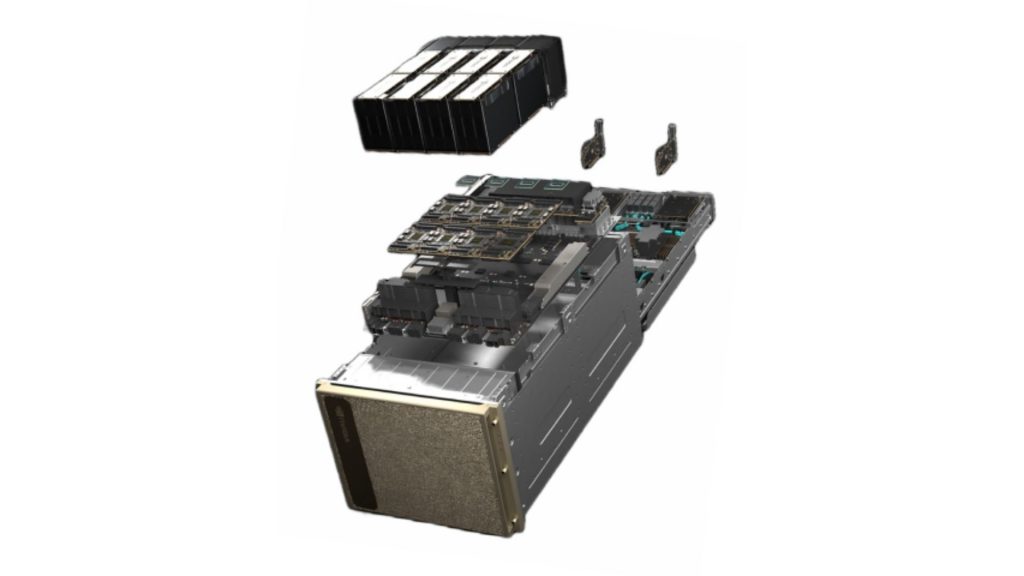
A Slurm GPU cluster coordinates compute resources across multiple nodes to support large-scale LLM training
5. How Slurm supports distributed LLM training
Slurm supports distributed LLM training by acting as the orchestration layer between training jobs and the underlying compute cluster. Its role is not to train the model directly, but to ensure that the right resources are available and that distributed workloads are scheduled and managed efficiently.
For LLM workloads, this matters because training often depends on several nodes, multiple GPUs per node, and tightly coordinated execution across the cluster. Slurm helps organize these resources so that training can run more reliably and at a greater scale. A Slurm-based workflow typically supports the following functions:
- Job scheduling: Queues and prioritizes training workloads based on cluster availability.
- Resource allocation: Assigns CPUs, memory, and GPUs to each job according to the requested configuration.
- Multi-node coordination: Supports distributed execution across multiple machines.
- Operational efficiency: Helps improve cluster utilization and reduce idle resources.
- Scalability: Makes it easier to run larger training jobs as model and dataset requirements increase.
In this sense, Slurm is especially valuable for teams that need structured resource management for repeated large-scale LLM training workloads.
5. Why deploy Slurm on Kubernetes?
Deploying Slurm on Kubernetes combines the strengths of HPC job scheduling with the flexibility of container orchestration. While Slurm provides structured control over training jobs and cluster resources, Kubernetes adds a more dynamic layer for deployment, scaling, isolation, and integration with cloud-native tooling.
This combination is useful for AI teams that want to run distributed training workloads in containerized environments while maintaining efficient scheduling and resource control. A Slurm-on-Kubernetes setup can offer several benefits:
- Dynamic scaling: Compute resources can be provisioned and adjusted more flexibly based on workload demand.
- Containerized workflows: Teams can package training environments more consistently and deploy them more easily.
- Multi-tenancy and isolation: Shared infrastructure can be segmented more effectively across teams or workloads.
- Cloud-native integration: Monitoring, automation, and observability tools can be connected more easily.
- Cost optimization: Resources can be provisioned on demand instead of remaining statically allocated.
For distributed LLM workloads, this approach can provide a more adaptable infrastructure model than traditional static cluster environments.
6. How FPT AI Factory supports distributed LLM training
For distributed LLM training, infrastructure design plays a central role in performance, scalability, and operational efficiency. AI teams need access to high-performance GPU resources, multi-node coordination, and an environment that can support large-scale training jobs more reliably.
FPT AI Factory’s Metal Cloud is designed for demanding AI and HPC workloads that require dedicated compute resources and stronger infrastructure control. For teams training large language models, Metal Cloud can provide a suitable foundation for building GPU cluster environments, running multi-node workloads, and scaling beyond the limits of single-node training.
- Multi-node GPU infrastructure for large training workloads
- Dedicated compute resources for GPU-intensive AI development
- HPC-style environments for distributed training and experimentation
- Greater infrastructure control compared with general-purpose cloud setups
- A scalable foundation for LLM training beyond single-node limits
This makes FPT AI Factory’s Metal Cloud a relevant infrastructure option for teams that need to train, experiment with, or scale large AI models in production-oriented environments.
In conclusion, distributed LLM training helps AI teams overcome the limitations of single-node environments by scaling training workloads across multiple GPUs and nodes. With a Slurm GPU cluster, teams can manage job scheduling, resource allocation, and multi-node execution more efficiently. For organizations building large-scale AI models, FPT AI Factory provides GPU infrastructure options that support demanding training workloads and help teams move toward more scalable, production-ready AI development.
Contact Information:
- Hotline: 1900 638 399
- Email: support@fptcloud.com