
At GTC 2026, FPT AI Factory connected with more than 30,000 attendees, alongside 1,000+ consultation sessions and over 240 AI startups. Beyond the scale and spectacle, the event revealed a more meaningful shift, one that quietly redefines how organizations approach artificial intelligence.
The conversation moved on. It is no longer centered on what models can do, but on how AI systems can be made to work in real-world environments, reliably and at scale.
From Tech Capabilities to Practical Innovation
At Booth #3315, that shift was easy to recognize. The space remained active throughout the event, but more notable than the traffic was the nature of the conversations. Visitors were not there to explore possibilities in abstract terms. They came with concrete questions shaped by real deployment challenges.
FPT AI Factory presented an all-in-one AI developer cloud, from robust, NVIDIA-accelerated GPU Cloud to inference-ready AI platforms. With the “Build Your Own AI” vision, FPT AI Factory aims to enable every AI innovator to turn AI ideas into reality faster and more cost-effectively.
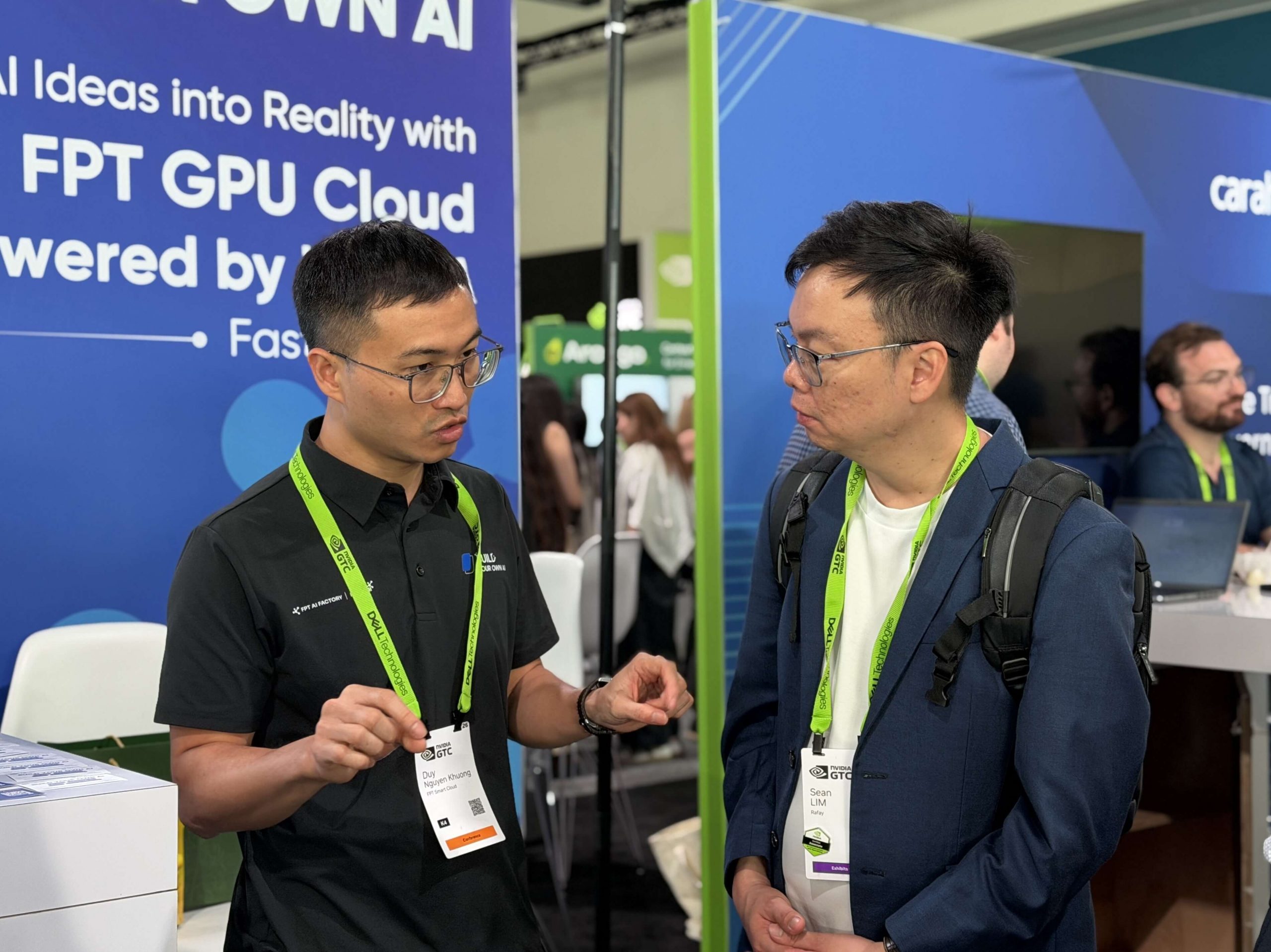
Image: 1-1 consultation session with FPT expert
Demonstrations such as AI Notebook and Serverless Inference quickly drew attention, especially with the availability of 25+ pre-trained models like NVIDIA Nemotron, NVIDIA Alpamayo, and Gemma 4 that could be applied immediately. But what seemed to matter most was not the features themselves. It was the speed they enabled. The ability to move from experimentation to a working system, without unnecessary complexity, became the focal point of discussion.
Announcement at GTC: Accelerating Reasoning and Agentic AI with NVIDIA HGX B300
This growing focus on execution also brought infrastructure into sharper view. As AI systems become more advanced, particularly in areas such as reasoning and agentic workflows, performance requirements are rising just as quickly.
At GTC, FPT AI Factory introduced its upcoming integration of NVIDIA HGX B300, designed to support these next-generation workloads with greater efficiency. At the same time, a new AI Factory site in Malaysia is being developed, expanding regional capabilities and enabling more flexible and sovereign-ready infrastructure across Asia-Pacific.
These developments point to a broader reality. Infrastructure is no longer just a technical layer behind the scenes. It is becoming a defining factor in how quickly organizations can deploy, scale, and continuously improve their AI systems.
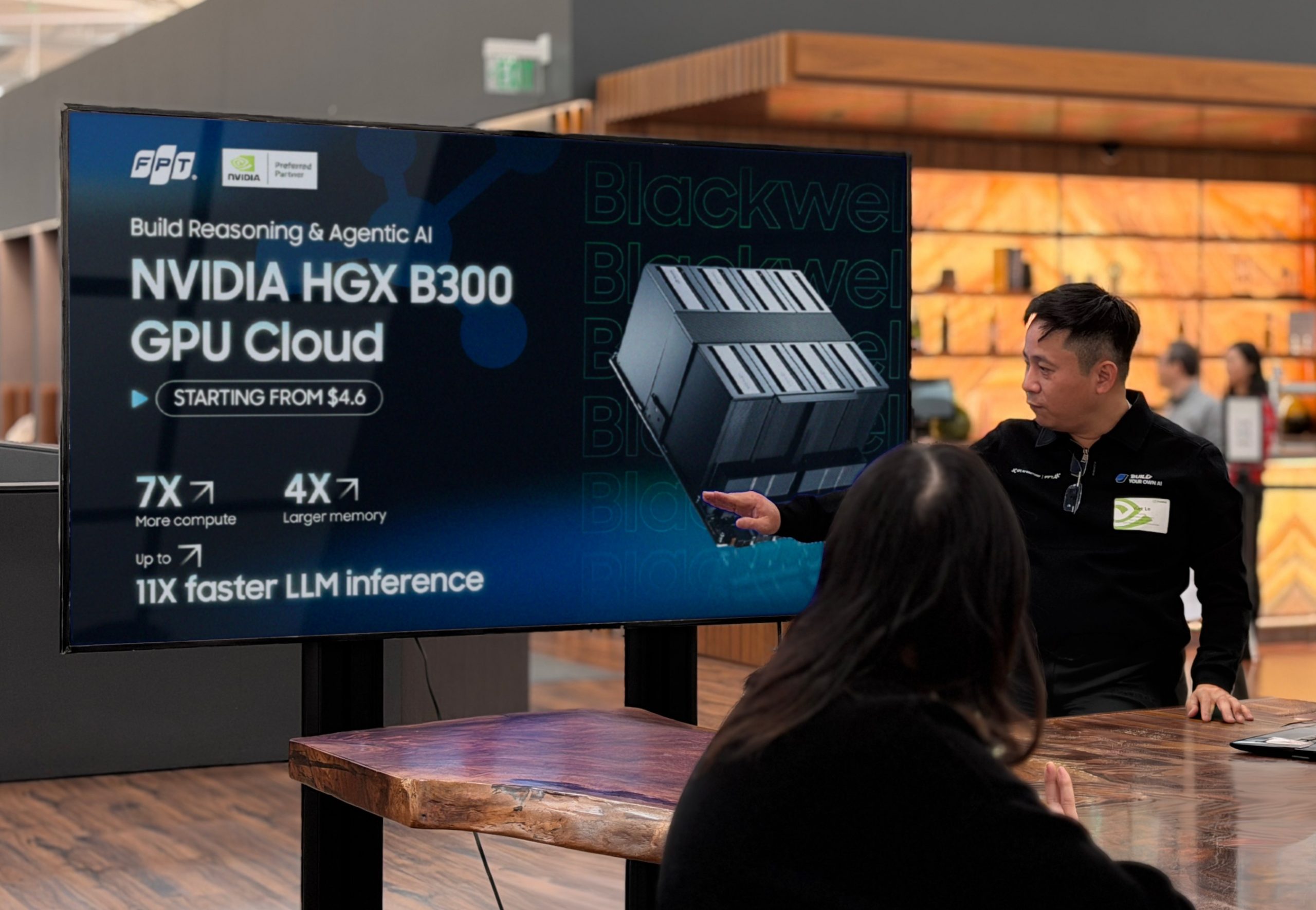
Image: Mr. Le Hong Viet – CEO of FPT Smart Cloud, FPT Corporation, announced the upcoming NVIDIA HGX B300
Commitment to Empowering the AI Innovators
Beyond the technical discussions, GTC also created space for more open and informal exchanges, particularly within the startup community. At the workshop “Energy for Innovation: Brewing Ideas, Empowering Startups,” conversations unfolded over Vietnamese cà phê sữa đá, offering a different setting but addressing very real challenges.
Founders and engineers spoke candidly about the difficulties of scaling AI products and expanding into new markets such as Japan and Southeast Asia. The need was not only for better technology, but for a broader ecosystem that could support both execution and growth.
These conversations continued at the booth, where knowledge-sharing sessions provided a closer look at how AI can be brought into production and how startups can accelerate their go-to-market journey.
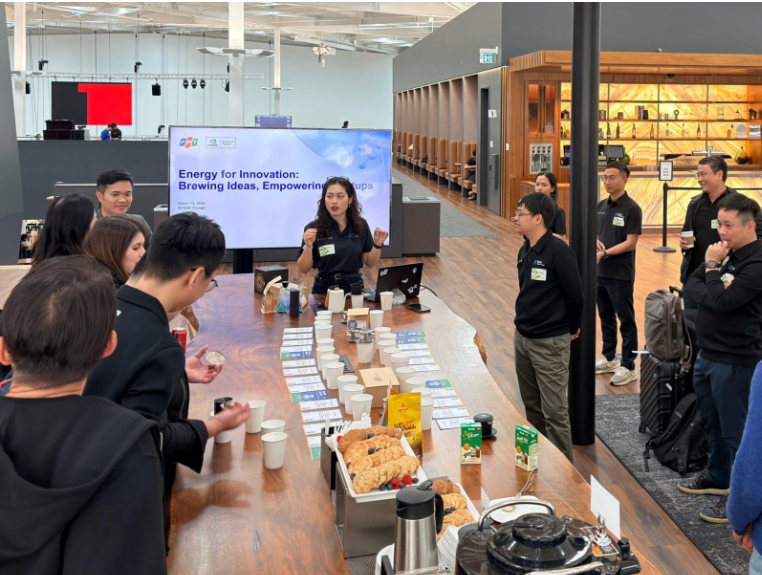
Image: FPT team brought a Vietnamese “cà phê sữa đá” workshop for AI startups to boost innovation
Key Takeaways from GTC
Taken together, the discussions at GTC point to a clear transition. The bottleneck in AI is no longer access to models. It lies in what comes after. Deployment, inference, cost efficiency, and system reliability are becoming the real challenges that organizations must solve.
At the same time, there is a growing emphasis on computational power and AI sovereignty. More organizations are looking to build systems they can control, aligned with their own data, markets, and long-term strategies.
This is where the competitive landscape is beginning to shift. Success in AI will depend less on who builds the most advanced models and more on who can deploy them effectively, operate them reliably, and improve them continuously in production.
GTC 2026 made one thing clear. AI is no longer an experimental frontier. It is becoming part of the operational backbone of modern organizations.
And in this new phase, the question is no longer what AI can achieve, but how well it can be made to work.
Explore more news:
FPT AI Factory Accelerates AI Reasoning Capabilities across Southeast Asia and Japan with NVIDIA