
Artificial intelligence is rapidly becoming an indispensable part of business operations. As organizations move beyond experimental generative AI projects, many are shifting toward production-scale AI deployment, integrating AI into everyday workflows.
This transition is changing the role of enterprise infrastructure. While early AI initiatives focused primarily on training models, organizations are gradually investing in the infrastructure required to deploy, operate, and scale AI in real-world business environments. As AI becomes a core business capability, the question is no longer whether organizations should adopt AI but whether their infrastructure is ready to support it.
The Shift from Training to Inference
The next phase of enterprise AI is driven by inference: the process of applying trained models to live business data to generate predictions, recommendations, and automated actions in real time.
Training remains essential for developing AI models, but inference is where organizations create ongoing business value. Every customer interaction, workflow automation, fraud detection system, recommendation engine, or AI-powered assistant depends on fast, reliable inference running continuously in production.
Unlike model training, which is typically performed periodically, inference workloads operate continuously and at scale. As enterprise AI adoption grows, organizations require infrastructure capable of supporting thousands of real-time requests while maintaining low latency, reliability, and consistent performance.
This shift means AI infrastructure is no longer designed solely for building models. Prospectively, it must support production environments where AI systems operate as part of everyday business processes.
How Agentic AI Is Accelerating This Shift
The rise of agentic AI is accelerating this transformation even further. Unlike traditional generative AI, which typically responds to individual prompts, agentic AI can plan, reason, use external tools, retrieve information, and execute multi-step workflows with limited human intervention. Instead of generating a single response, AI agents continuously interact with enterprise systems, databases, APIs, and business applications to accomplish complex tasks.
This growing adoption is already visible across enterprises. According to Deloitte, 23% of organizations currently use agentic AI to at least a moderate extent. Within the next two years, that figure is expected to rise to 74%, including 23% planning extensive adoption and 5% expecting agentic AI to become a core operational capability.
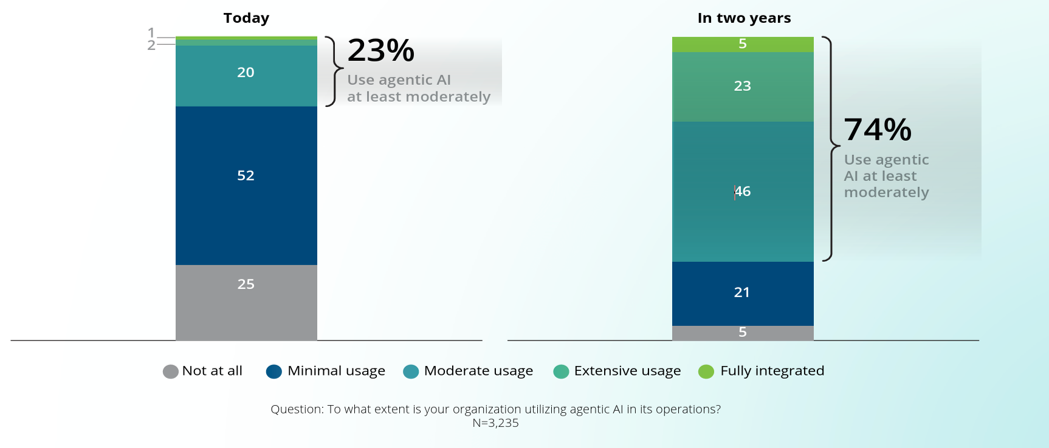
Figure 1: Extend of agentic AI usage (percent). Source: Deloitte (2026)
This represents more than another technology trend. It reflects a shift in how enterprises expect AI to contribute to business operations. As AI agents execute longer-running, multi-step tasks, infrastructure requirements also change. Continuous inference workloads demand scalable GPU resources, high-performance networking, persistent memory, orchestration platforms, and storage systems capable of supporting sustained AI operations.
The Readiness Gap: When Strategy Outpaces Infrastructure
While organizations increasingly recognize the strategic importance of AI, many remain operationally underprepared. According to Deloitte, year-over-year perceptions of organizational readiness declined across several areas, including technical infrastructure (43%), data management (40%), and AI talent (20%). Most respondents believe addressing these infrastructure challenges will require more than a year.
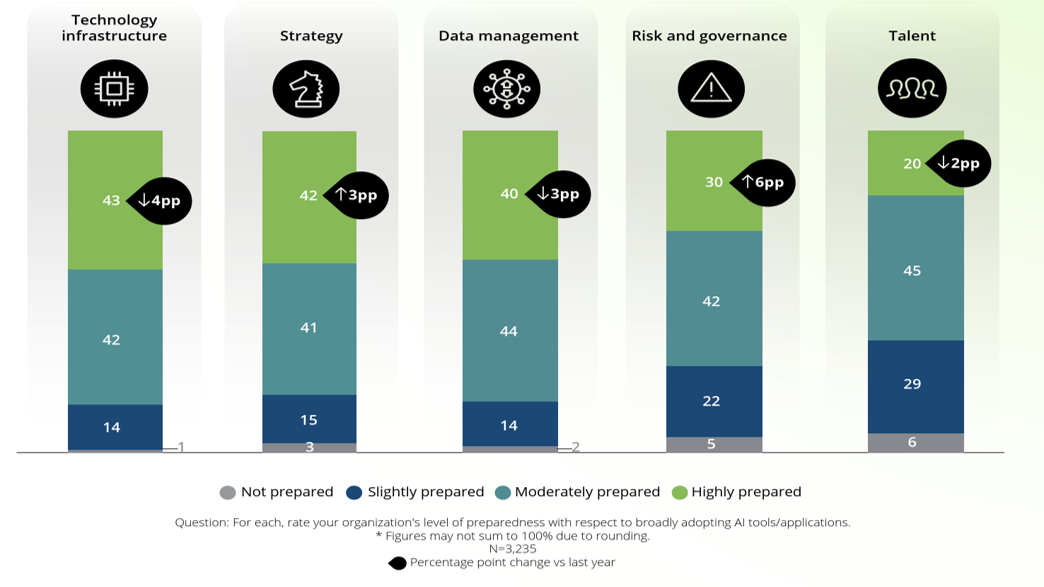
Figure 2: Level of preparedness for AI adoption. Source: Deloitte (2026)
This creates a significant business challenge. AI adoption is accelerating much faster than enterprise infrastructure modernization. Organizations may have clear AI strategies and well-defined use cases, but without infrastructure capable of supporting production-scale inference, many initiatives risk remaining confined to pilot projects.
Industry analysts have reached a similar conclusion. Tell Technology India argues that organizations do not necessarily need to be “born AI-native” companies, but they do require AI-native infrastructure capable of supporting agentic workloads. In other words, competitive advantage increasingly depends on deploying AI reliably at scale.
Preparing For The Next Phase of AI
However, building AI-native infrastructure from the ground up is not the only path forward. Cloud-based, inference-ready GPU platforms allow organizations to access enterprise-grade AI infrastructure without the time, cost, and operational complexity of building dedicated environments themselves.
FPT AI Factory provides inference-ready GPU infrastructure designed for production AI workloads. With GPU Containers that launch in approximately one minute, scalable GPU Clusters, pay-as-you-go pricing, and enterprise-grade reliability, organizations can accelerate AI deployment while reducing infrastructure complexity.
The rapid adoption of agentic AI demonstrates that enterprise AI is entering a new phase. For organizations evaluating their AI strategy, the challenge is no longer simply choosing the right model. Success depends on whether the underlying infrastructure can deliver the performance, scalability, and reliability required to support AI in production. Those that prepare today will be better positioned to realize the full value of AI tomorrow.
References